


My little firecrackers were born on July 4, 2012. One came in at 4 pounds 10 ounces, the other at 5 pounds 7. I remember holding them in those first hours and feeling something I hadn’t anticipated: a quiet, urgent awareness that time was already moving. That the clock had started. That every day from that moment forward was one I would never get back.
I made a rule for myself when they were born. No matter what was happening at work, I would be done by 5:30. Not a goal. A standard. Non-negotiable. For years, I kept it, and I’m proud of that. But if I’m being honest with myself today, there was more runway I didn’t use. There were days off I left on the table, mornings I could have been present for, ordinary Tuesday afternoons when my boys were small enough to still want me around all day. My wife Jana was home with them, which was a genuine gift, and I’m grateful our situation made that possible. But I was working hard during those years and telling myself it was for them. In a real sense, it was. But the version of “for them” that mattered most to a three-year-old wasn’t showing up in my bank account. It was showing up in the backyard.
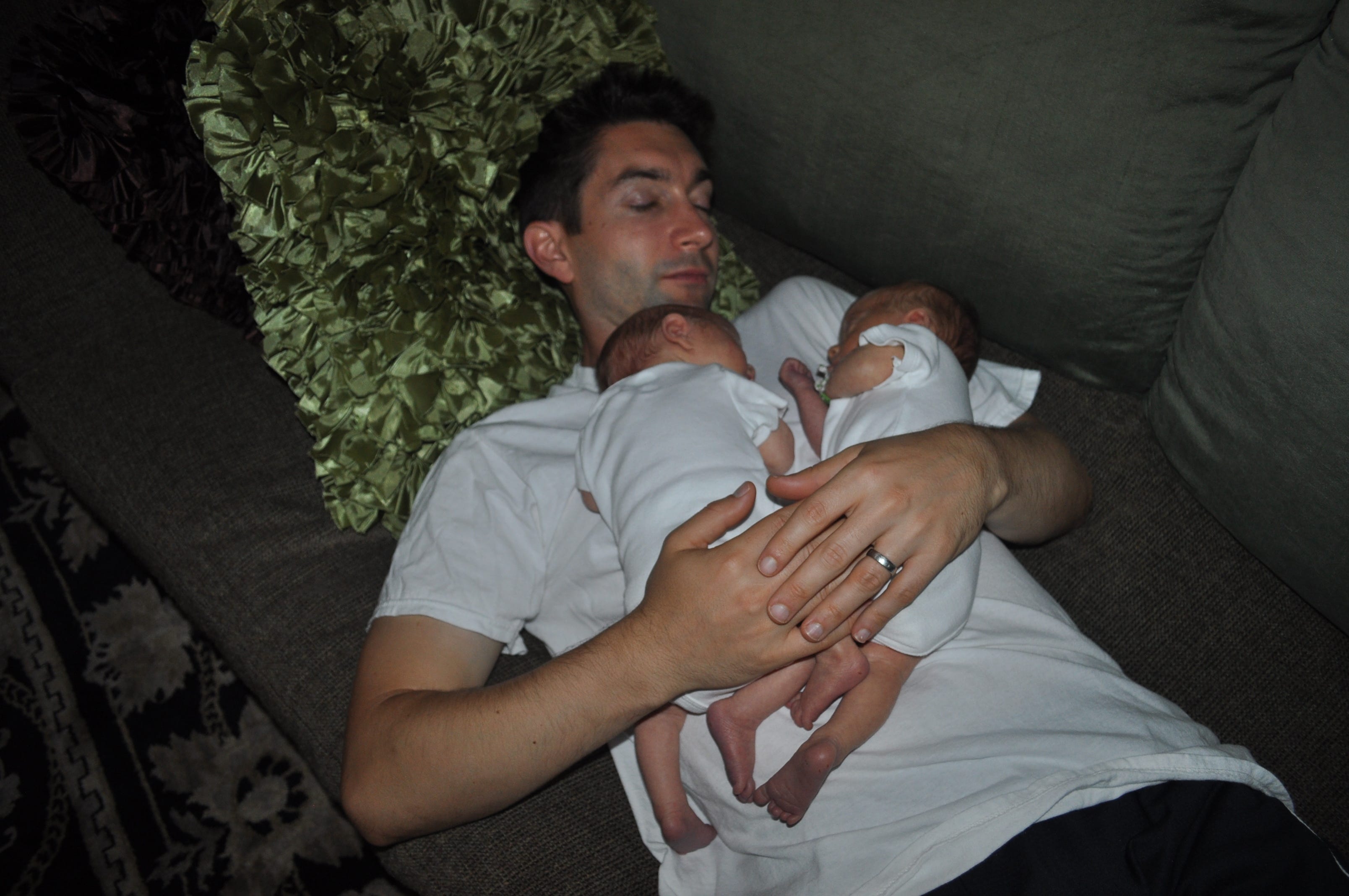
I will never get to see my kids grow from those tiny July 4th babies into their own people for the first time. That chapter is written. I don’t say this to wallow in regret because I believe I showed up for my boys in ways that matter. But I think this is one of the quieter traps money sets for people who are trying hardest to build something. You convince yourself the extra work is an act of love, when sometimes the most loving thing you can do is close the laptop and go outside. The business would have survived a few more days off. Our financial life would not have materially suffered. But I can’t go back and take those days now.
The Drift That Looks Like Ambition
We talk a lot about drift in this newsletter, that slow, quiet slide away from the life you actually want, usually without noticing it’s happening. Most of the time, we picture drift as passivity, someone coasting, losing motivation, letting life happen to them. But there’s another version of drift that’s harder to spot because it looks like hustle from the outside. It’s the person building, achieving, and accumulating, but slowly losing the thread of what any of it is actually for.
Money pursued purely for its own sake is just a faster drift in a nicer car. The numbers grow. The pressure grows with them. The question of why gets quieter each year until it stops asking altogether. And the people who love you most have learned to stop competing with it. I’ve watched this play out in people I know and respect, guys who built real financial success and arrived at the other side wondering why it didn’t feel the way they expected. The accounts were right. The life didn’t match. Something important had been traded along the way, and they weren’t entirely sure when the trade had been made.
Building financial wealth is one of the most important things you can do for the people you love and the life you want to live. But wealth without direction is just accumulation. And accumulation without intention will fill every hour you give it, leaving very little room for the things that actually make it worth having.
Money Has Three Stages
I think about money operating at three different levels, and where you sit on that spectrum shapes almost everything about how it affects your daily life.
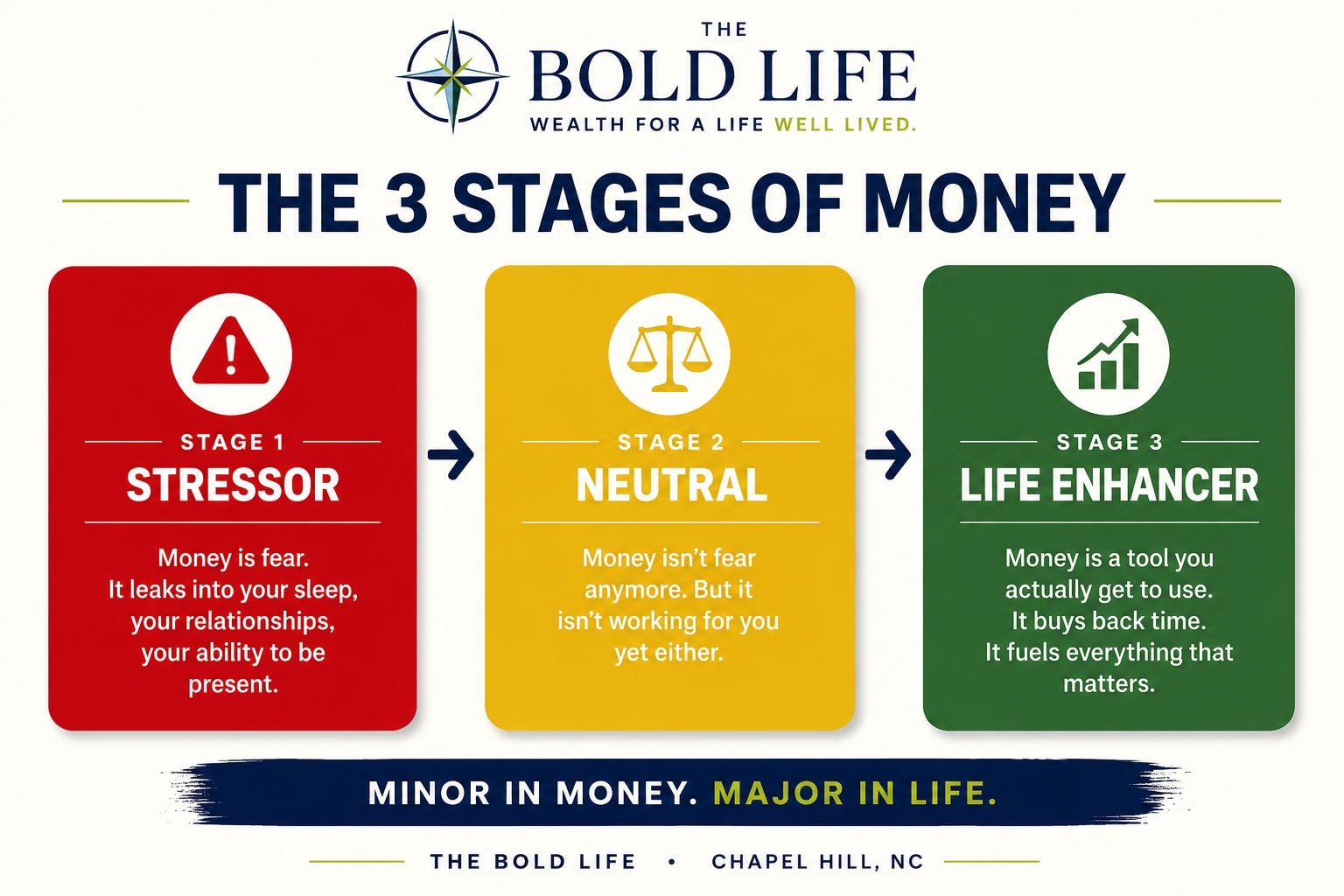
The first stage is where money is a constant source of stress. Bills are tight, margin is thin, and financial pressure leaks into everything else: your sleep, your relationships, your ability to be present. When money is a stressor, it is very hard to think clearly about anything else. The anxiety doesn’t stay in your wallet. It travels with you everywhere you go.
The second stage is neutral. You’ve created enough margin that money isn’t a daily source of fear. You’re not wealthy by most definitions, but you’re not afraid either. This is a genuinely underrated place to reach, and getting there usually requires nothing more than the basics: spending less than you earn, investing the difference consistently, and staying patient. We’ve talked about that formula in this newsletter before, and I’ll keep saying it because it works. The formula isn’t complicated. The discipline to follow it is what most people struggle with.
The third stage is where money becomes a life enhancer. At this level, money is a tool you actually get to use. It expands your capacity for the things that matter most. It buys back time. It funds experiences with the people you love. It gives you the freedom to say yes when the right opportunity appears and walk away when something doesn’t align with your values. It lets you be generous in ways that feel meaningful rather than obligatory. Money at this stage stops being a scoreboard and starts becoming fuel, sending energy toward the parts of life that matter most.
Most people spend the majority of their financial lives trying to get from stage one to stage two. The work of The BOLD Life is to help you understand that stage three is worth building toward intentionally, and that the path there is less about reaching a specific number and more about developing the right relationship with money along the way.
The Line You Don’t Want to Cross
I don’t believe you can have too much money. But I do believe you can give money too much importance, and that distinction matters more than most people realize.
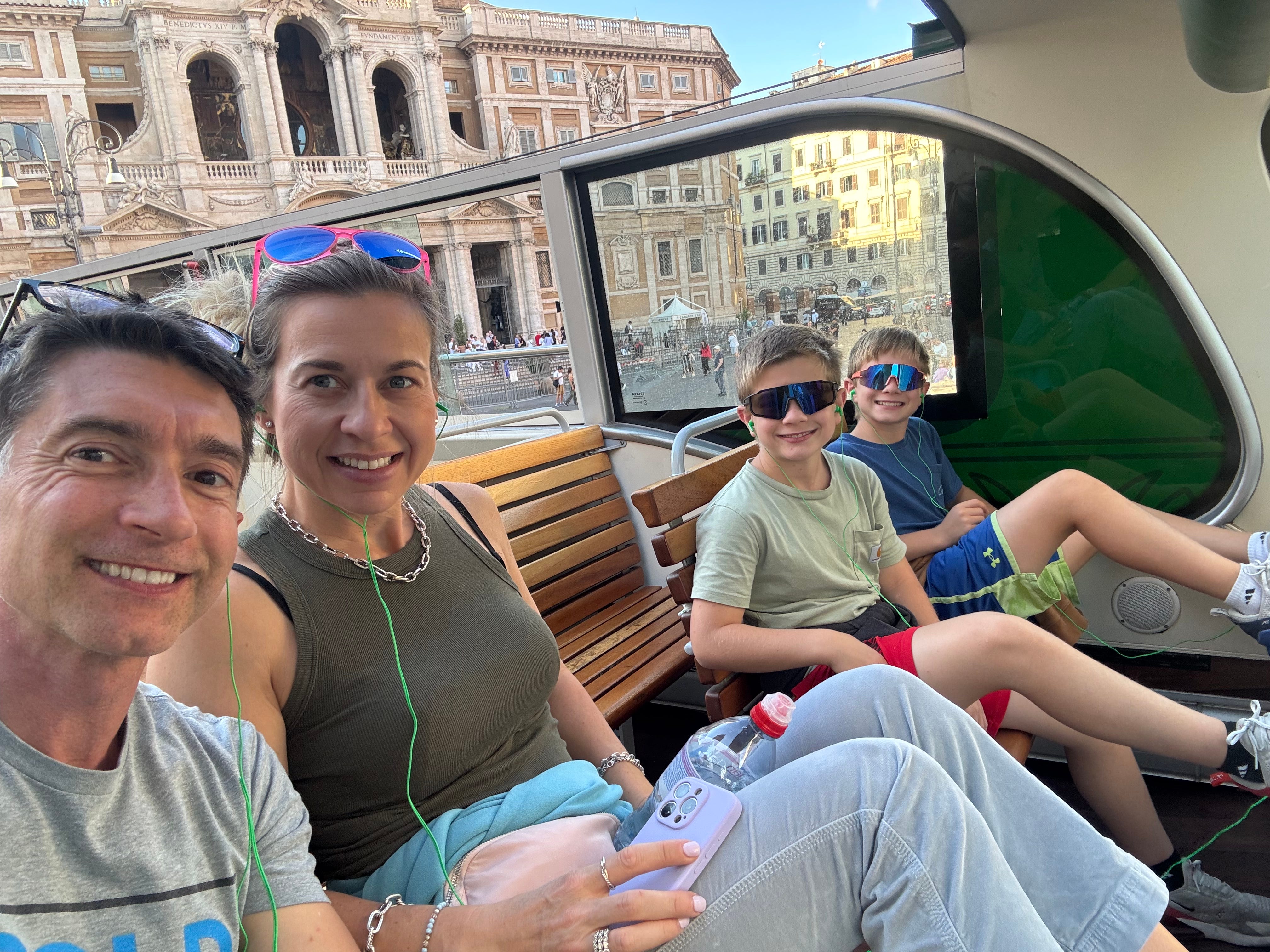
For me, money has become a life enhancer. Everything I do with it is aimed at what I love most: my family and the experiences we share. We’ve taken trips that cost a lot of money, and we’ve taken trips that cost almost nothing. What I remember isn’t the price tag. What I remember is Jana laughing at dinner, the boys discovering something for the first time, going on excursions with friends, the feeling of being completely present with the people I love most. Money funded the backdrop. It didn’t create the moment.
But I’ve watched people I know and respect, people who have built real financial success, make a different choice without fully realizing it. They keep choosing work over their family, year after year. I don’t think most of them value work more than the people they love. I think they gradually let the drive to earn more take over, and they stopped noticing the trade-off.
Here’s what I’ve learned: for every yes, there is always a no. Every hour you give to work is an hour you are choosing not to give somewhere else. That math doesn’t lie, and it doesn’t wait.
When money moves from being a tool to being the measure of your worth, something shifts. Decisions that should be straightforward become complicated. You find yourself working with people you don’t respect, compromising in small ways that erode your integrity over time, because the financial upside seems to justify it. It rarely does. The cost of those compromises almost never shows up in the numbers, but it shows up everywhere else. In how you sleep. In who you’re becoming. In whether the people closest to you would describe you as present.
The moment money starts asking you to compromise your values to get more of it, it has stopped being a tool and started being a master. That’s the line. And once you cross it, more money doesn’t fix the problem. It deepens it. The man who builds wealth at the expense of his values doesn’t end up wealthy in any meaningful sense. He ends up with resources and regret. That is not what we are building toward here.
Money is a remarkable tool when you use it with intention. It can fund a life that is genuinely richer, fuller, and more aligned with what you believe matters. It can make you more generous, freer, more present. It can give your kids experiences they’ll carry for a lifetime. It can let you show up for the people who need you without the constant weight of financial fear dragging at your heels. All of that is real, and all of it is worth building toward. But money does none of those things on its own. It only does them when you direct it toward something that matters.
Start Bold
Most people never ask these questions. That’s exactly why they stay stuck. These three are worth sitting with this week, not as homework, but as shortcuts to clarity.
Where is your money actually pointing right now? Not where you intend it to point, but where it’s going. If you stopped working tomorrow, would what you’ve built reflect what you say matters most?
Look at last week’s calendar honestly. Does how you spend your hours match your priorities, or is there a gap between what you say matters and how you actually live? The gap, if there is one, is where the work starts.
Think about the last time you chose work over the people you love and told yourself it was “for them.” Was it? Because sometimes it is. And sometimes we’re just more comfortable there than we want to admit.
These questions don’t take long to ask. But they tend to stay with you. That’s the point.
What’s one thing you’ve told yourself was “for your family” that your family probably would have traded for more of your time? I’d love to hear it in the comments.
Next week, we bring it all together. Health, relationships, and money. Not as three separate categories to manage, but as three interconnected forces that either compound each other or quietly work against each other. The picture that emerges might change the way you think about all three.
Build Wealth. Protect What Matters. Live Fully.
The BOLD Life is for people who want to build wealth without losing themselves in the process. People who want their success to strengthen their health, relationships, purpose, and freedom rather than compete with them.
If that’s the kind of life you’re building, you’re in the right place.
If you’re new here, welcome. Start with The Blueprint of a BOLD Life to get a feel for the framework, then read whatever draws your attention. Every post stands on its own.
Don’t drift; live boldly.

I can relate to this post quite a bit. When I worked in academic medicine, the goal was to become “academic famous” which means get big grants, publish big papers and speak at big meetings around the world. It’s not about money as much as ego. But all of these things take time away from the family and, like you suggested, you can’t get that time back.
I asked the most accomplished interventional radiologist I know what he would have done differently in his career, and without hesitating he said he would have chosen to spend more time with his kids. It was sobering to me. And now I try to live accordingly. Thanks for this great post.
For me, it was working longer hours and chasing bigger goals under the belief that I was doing it "for my family." What I've come to realize is that while I was focused on providing more, the people I loved may have preferred more of me instead. I thought success meant earning more, building more, and giving more, but somewhere along the way I was trading time the one thing I can never get back.
As a father now, I see things differently. My son won't remember every dollar I made or lost, but he will remember whether I was present. One of the biggest lessons I've learned is that providing isn't just financial, it's emotional, physical, and relational. Sometimes the greatest gift you can give your family isn't more money; it's more moments.
Today, instead of trying to be everyone's solution to financial problems, I focus on allowing people to experience the life they create for themselves. I've learned that helping isn't always rescuing. Sometimes the most loving thing you can do is let people grow through their own experiences. I can't be everyone's superhero and nemesis. My responsibility is to be present for my family, lead by example, and build a life rooted in purpose rather than obligation.