


If you’re new here, welcome to The BOLD Life. Each week I write about building wealth in money and in life, because the goal was never just a bigger number in an account. It’s a life that actually feels rich. If someone sent this your way, I’d love for you to subscribe.
I was a young child when I first realized my dad wasn’t like the other dads anymore. He was one of the nicest, hardest-working men I have ever known, and at forty he was diagnosed with Multiple Sclerosis. Over the years that followed, I watched him lose his ability to walk, and eventually his ability to do almost anything physical at all.
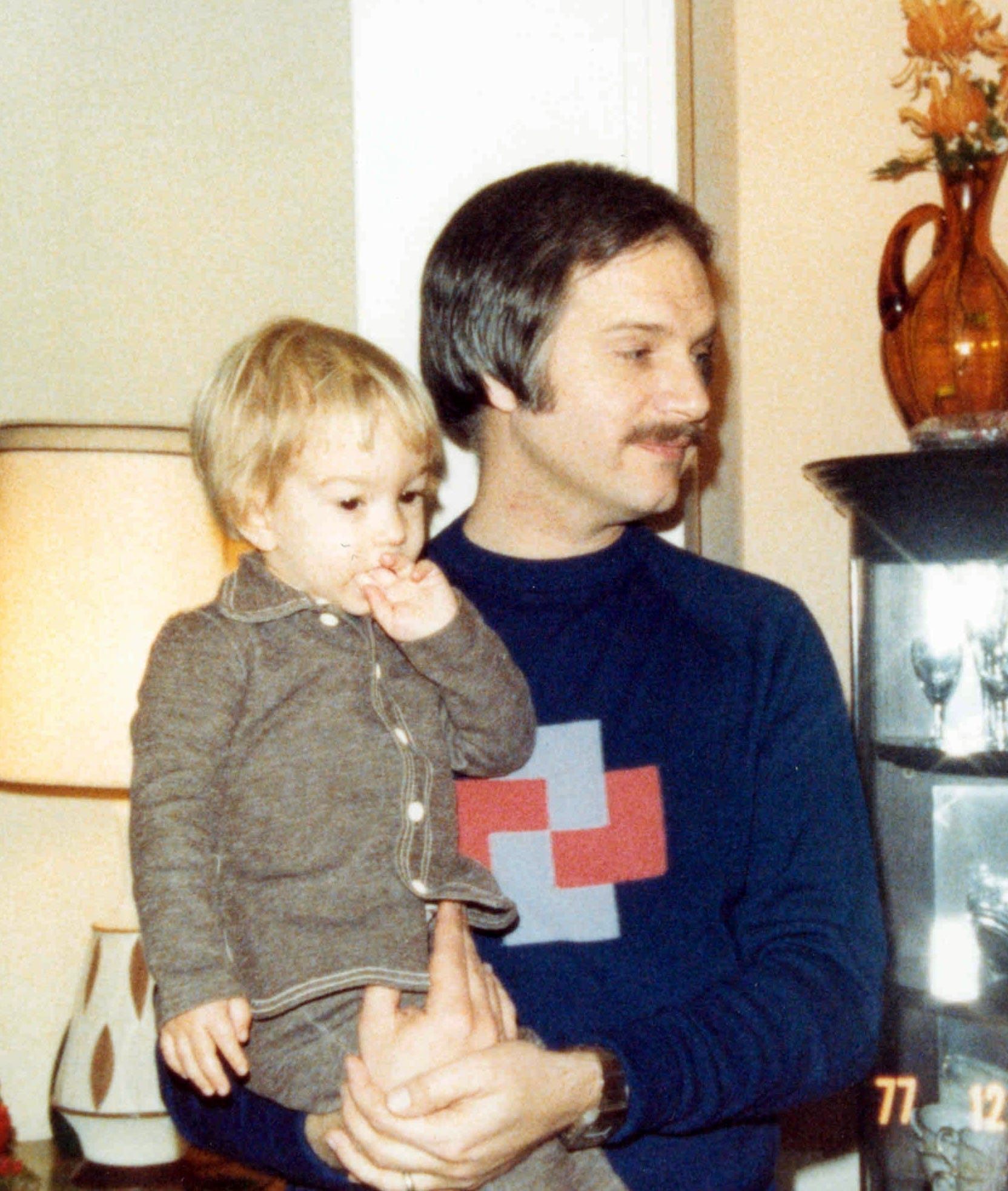
I could have taken that and written a story out of it that said life isn’t fair, or that we don’t get to choose the cards we are dealt. Honestly, both of those things are true. But somewhere along the way I decided that wasn’t going to be my story. I decided that watching my dad lose so much, so slowly, was going to be my call to action instead. Life is short. Don’t let the grass grow under your feet. That sentence has run underneath almost every decision I have made since, in business, in money, in how I spend my Saturdays with the boys.
Here is the part I want you to sit with this week. My dad didn’t hand me that story. The event happened to both of us. I am the one who decided what it meant.
Last Week and This Week
Last week we talked about knowing your target: understanding where you actually stand today, where you want to go, and why you want to go there. That’s the compass. Before we get into the tactical side of getting there (the budgets, the systems, the investing) we need to spend some time on something that comes before all of it. Your financial mindset.
The Question Underneath the Number
Here’s something I’ve wondered about for years. Why do some people with plenty still feel like they don’t have enough? Why doesn’t hitting a certain net worth automatically unlock freedom? I’ve met people with more resources than they could spend in three lifetimes who still can’t quite let themselves use any of it. The number changed. The feeling and their story didn’t.
That gap isn’t a math problem. It’s a mindset problem, and it sits underneath every formula we’ll ever talk about here. The block was never in your spreadsheet. It was in your story.
Everybody Has a Story
Everybody has a money story. Not everybody is aware of it.
A money story is the sentence, or small collection of sentences, you repeat to yourself often enough that it starts to feel like truth. Something like, I’m just not good with money. I’ll never catch up. I didn’t grow up learning this stuff. Money just stresses me out.
That sentence shapes almost every financial decision you make, and most people never stop long enough to question where it came from or whether it’s even true.
The Story I Didn’t Choose
I didn’t grow up with much financial intelligence. I grew up in a humble household with blue-collar roots in Pittsburgh. My mom was a teacher, and my dad was a draftsman. They did the best they could with what they had. We owned a home and took real pride in it. But nobody sat me down and explained investing, or compounding, or how money could work for me instead of against me. Money showed up as something you worked hard for, spent, and hoped there was enough of.
Money from a scarcity perspective was common in our household. Money was a factor in every decision. What time we went to the movies (matinee, of course), when we went to the baseball game (Buck Night, aka dollar tickets), we mowed the lawn, changed the oil in the cars. We didn’t pay for anything we could do ourselves. There was no consideration of the value of our time.
That experience planted a story in me. Not a dramatic one, and not a victim story. Just a plain belief that money was something you dealt with, not something you mastered. Everything was a transaction. I lived inside that story for a long time without ever realizing it was there.
Here’s the part most people miss. You didn’t choose your money story. You inherited it from your parents, your environment, your friends, your early experiences. You absorbed what felt normal, what felt safe, what felt risky, what people like you did with money. Then, without ever consciously deciding anything, you started living it out.
That’s why two people with the same income can end up in completely different places twenty years later. Same numbers. Different stories.
We didn’t have rich friends growing up. We didn’t know anyone who ran their own business. But when my mom switched from teaching to working in the sales training department at a financial services company, I was exposed to people who were financially well-off, and I wanted to be like them. I figured people with money didn’t carry the stress ours carried, so I started studying money and investing. That scarcity mindset didn’t let go easily. It stuck with me for decades, even as I kept learning. When I finally shifted to an abundance mindset, the financial results followed.
We may inherit our mindset from others. But we have the ability to rewrite the story to our choosing.

Victims Explain. Leaders Decide.
Once I saw my own story clearly, something shifted. The problem was never that I was bad with money. The problem was that the story I was living no longer matched who I wanted to become. Once you can see the story, you regain your power. Until then, you’re just reacting to it.
A lot of people are living out a victim-style money story without ever calling it that. It sounds reasonable. This is just how things are. I don’t really have control. I’ll deal with it later. I’ll save more once I make more.
Leaders live out a different story. They don’t wait for perfect conditions, or for the moment they feel fully confident, or for the day they finally know everything. They choose a direction and then act in line with it.
The Question That Changes Your Perspective
One of the most useful shifts I ever made was trading one question for another. I stopped asking, "Why is this hard for me?" and started asking, "Who do I want to become with money?" That single change moves the goal from perfection to progress, and progress is a much easier thing to build a life around.
Where Most Financial Advice Gets It Backward
Most personal finance advice starts with tactics. Budgets, apps, rules, spreadsheets. Those matter, and we’ll get to plenty of them in the weeks ahead. But tactics never stick when they conflict with your identity. If you believe deep down that you’re not good with money, no budget will save you. Eventually you’ll sabotage it, just to stay consistent with the story you believe is true.
The story always wins, until you rewrite it.
Rewriting your money story doesn’t mean pretending your past didn’t happen. It means deciding your past doesn’t get to write your future. It means trading a story that keeps you small for one that moves you forward. Not overnight, and not dramatically. Just consistently.
The Formula We’ll Build Together
Over the next several weeks, here’s the path we’re going to walk. First, you identify the story that isn’t serving you. Then you choose a new identity. Then you bring in new inputs, mentors, books, environments that reinforce it. Then you practice alignment, small daily decisions that back it up. And then you let compounding do what it always does.
That’s it. Simple. Not easy, but powerful.
Today we’re only working on step one. Awareness. Because you don’t change a story by deleting it. You change it by seeing it clearly, maybe for the first time.
Your Turn + Start Bold
Your Turn: Take five minutes this week and write down the sentence you most often tell yourself about money. No judgment, no fixing, just write it down. Then ask yourself one honest question: Does this story help you become who you want to be?
Drop one word in the comments: is the money story you grew up with rooted more in scarcity, or abundance?
Start Bold: This week, simply notice when that story shows up. When you swipe your card. When you avoid looking at an account. When you delay a decision you already know you should make. Awareness is not weakness. It’s where change begins.
Why We Build a BOLD Life
At BOLD, we believe money is not the goal. It’s a tool. We build financial wealth not to keep score or to chase status, but to unlock freedom: freedom to live aligned with our values, to be connected to the people we love, and to be fulfilled by the choices we make every day. That’s the real payoff. That’s what it means to minor in money and major in life.
Minor in money. Major in life.
The BOLD Life is for people who want to build wealth without losing themselves in the process, people who want their success to strengthen their health, relationships, purpose, and freedom rather than compete with them. If that’s the life you’re building, you’re in the right place. New here? Start with The Blueprint of a BOLD Life, then read whatever draws your attention. Every post stands on its own.
If this post gave you something to think about, would you consider sharing it with one person who needs to hear it? It’s the best way this newsletter grows.
Don’t drift. Live boldly.

Chris, you provide such excellent information from your heart. So educational and so enjoyable to read. I always knew you would be a star. Thank you so very much for your time and sharing. I look so forward to reading your articles.
Sara
I think my "roots word" would be oblivion. I don't ever remember wanting anything or thinking about it...now that I do think about it, traveling around the country competing gymnastics for 11 years was probably pretty expensive....college for 3 kids was expensive yet our undergrad was paid for all of us. I just thought that's how it was....I'm sure sacrifices were made to support all of that and more....how selfish of me not to notice or even think about money and to only focus on my own goals...extremely egocentric. I've done a much better job of talking about money, budget etc. with my own children, thank goodness...