


If you’re new here, welcome to The BOLD Life. Each week I write about building wealth in money and in life, because the goal was never just a bigger number in an account. It’s a life that actually feels rich. If someone sent this your way, I’d love for you to subscribe.
Over the last few months, the schedule loosened, the pace softened, and maybe we let ourselves off the hook a little. That’s summer.
But now September is here. The kids are back in school. The calendar fills up. The days get shorter, and something in us shifts too.
In nature, spring is the season of growth. Fall and winter are for slowing down. For a long time, I assumed people worked the same way - that the energy and ambition we started the year with would naturally fade as the year went on.
But we’re not trees. We get to decide how we finish. Four months remain in 2026. That’s a third of the year - more than enough time to change what you’ll say about this year when it’s over.

Take a minute and think back to January. You probably set a resolution or two, maybe wrote it down, maybe just said it out loud to yourself in the shower. How is that going? If you are like most people, the answer sits somewhere between barely and not really. That is okay. Resolutions rarely survive contact with a real year, with real work, real kids, real life. But here is a new way to look at it: you do not have to wait until next January to start over. We still have four months left in 2026! That is enough time to build real momentum, if you are willing to commit to it starting now, not on some future Monday that keeps sliding back a week.
So instead of waiting for the calendar to reset itself, let’s reset ourselves. I am calling it the September to Remember Challenge, or the 5-5-5 Challenge for short, and the framework is simple on purpose. For every day in September, you commit to just five minutes in each of the three areas of life that run everything else: health, relationships, and money. Fifteen extra minutes a day. Not a course. Not a coach. Not a 90-day transformation program. Just daily reps, in the three places you cannot outsource to anyone.
Health
Health, in this challenge, is simple. Every day in September, do five minutes of physical activity beyond whatever you already do. Not instead of your normal routine, on top of it. Some days that might be a five-minute walk around the block after dinner. Some days a quick five-minute run. Some days five minutes of pushups, squats, or whatever bodyweight movement you can squeeze in on the office floor between meetings. You decide what it looks like. The only rule is that you do it every day, without exception. Five minutes feels small enough that you never have an excuse to skip it, and that’s the point.

If you want to go deeper on why movement matters so much to how I run my own days, I wrote more about habits in a series back in January.
Relationships
Relationships work the same way. Every day in September, spend five minutes reaching out and making one real connection. And here’s the twist: not the same friend twice. Call someone different each day. Check in with old friends you haven’t talked to in months, sometimes years. You never know who is having a hard week and needs a five-minute phone call more than they would ever admit out loud. The bar is low on purpose: a call, a voice memo, a real conversation instead of a text that says “we should catch up soon” and goes nowhere. Commit to making one genuine connection every single day, and let the list of who you are calling get longer, and more surprising, as the month goes on.

Money
Money gets its own five minutes a day too, and this is the one people skip because it feels less urgent than the other two. Don’t skip it. Spend five minutes a day, every day, doing something focused on your money. Some days that might mean reviewing your budget. Other days it might mean setting a new financial goal for the quarter ahead. Some days, pick up a book on money and read five or ten pages.
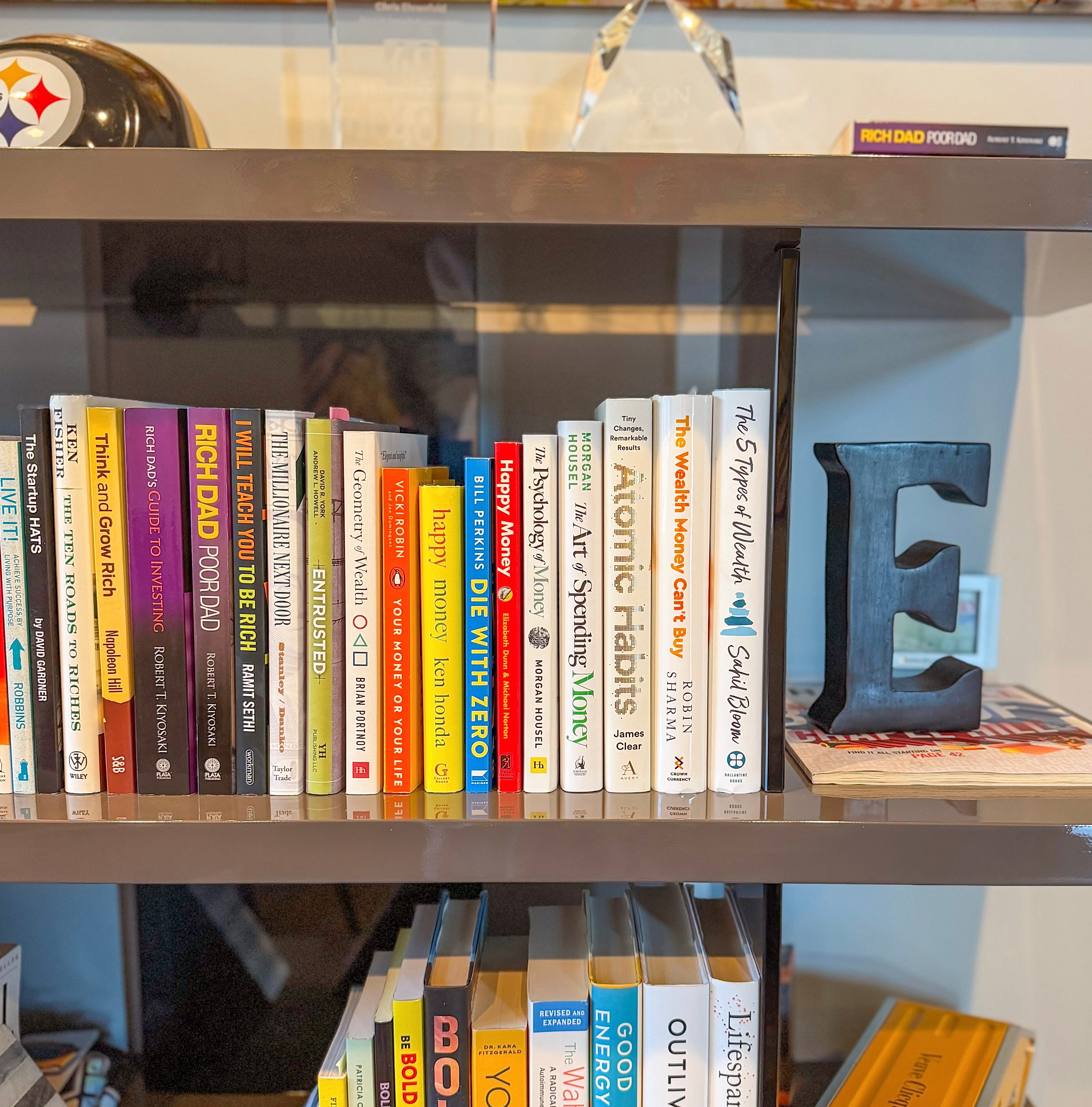
And if you want more options to rotate through, there is no shortage of them. Check your net worth. Review last month’s statement line by line. Look at your retirement contributions and see if you can nudge them up even slightly. Audit your subscriptions and cancel the ones you forgot you were paying for. Research one stock or fund you’re curious about. Calculate your savings rate. Negotiate one recurring bill. Learn one financial term you’ve always nodded along to without really understanding. Sit down with your spouse or partner for a five-minute money date where you just talk openly about where things stand. Pick whichever one fits that particular day. The point is not which move you make. The point is that you show up for your financial life every single day, instead of only thinking about it when something goes wrong.
Have a plan, and write it down
A challenge like this only works if you know exactly what you are committing to before September 1st arrives. Vague intentions don’t survive a busy Tuesday. Specific, written commitments do.
Here is what mine might look like, as an example:
Five minutes of movement beyond my normal day, a walk after dinner, a quick set of bodyweight exercises, whatever fits that day.
Call one friend every day, a different friend each time, especially the ones I haven’t talked to in a while.
Five minutes on my money, rotating between reviewing the budget, reading a few pages of a money book, and checking in on our goals.
Write your version down. Then track it every night. Go back to your list before bed and mark down what you actually did in each of the three areas. That’s the whole system. Nothing complicated, nothing that requires an app or a subscription, just a piece of paper or a notes app and the willingness to be honest with yourself for 30 days straight.
Here is what I have learned after years of setting and chasing goals. Motivation gets you started, but tracking is what keeps you going. Write it down. Use your notes app, a whiteboard on the wall, whatever works for you. At the end of each day, check the boxes. At the end of the month, look back at what you built.
A Favor
If you enjoy this content, click the 💚 below. It takes two seconds, and it helps more people find these posts. Thank you.
And remember this while you’re doing it: habits compound the exact same way money does. A dollar invested today is worth more than the same dollar invested next year, not because the dollar changes, but because time is doing the work in the background, every single day, whether you’re paying attention or not. Your habits work the same way. Get one percent better each day and stick with it for a year, and you don’t end up 365 percent better; you end up nearly 38 times better, because each day’s progress builds on every day before it. That is not a metaphor. That is the math.
Fifteen extra minutes a day does not sound like much. It isn’t, on day one. But I believe those 15 minutes will compound over the course of the month and the year into better health, better relationships, and better control over your money. And all three, working together, point to the only goal that actually matters underneath any of this: a happier life.
Start Bold
Pick your 5-5-5 today: one physical activity, your plan for who you’ll call, and your money move. Write all three down in one place.
Choose your tracking method: notes app, spreadsheet, whiteboard, journal- whatever you will actually use- and check it every single night in September.
Tell one person you’re doing this. Accountability compounds too, and you will be far more likely to finish what you started if someone else knows you started it.
We build financial wealth not for status or scorekeeping, but to fuel the areas of life that matter most: family, health, growth, generosity, joy. September isn’t about becoming a different person by October 1st. It’s about proving to yourself, in small daily reps, that you don’t have to wait for a new year to become the person you actually want to be. Four months is plenty of time to turn 2026 into a year you are proud of, if you stop waiting for permission to start.
Your Turn
Are you in for September? Reply and let me know which of the three- health, relationships, or money- you think will be hardest for you to stay consistent with. That is usually the one worth focusing on most.
The BOLD Life is for people who want to build wealth without losing themselves in the process - people who want their success to strengthen their health, relationships, purpose, and freedom rather than compete with them. If that’s the life you’re building, you’re in the right place. New here? Start with The Blueprint of a BOLD Life, then read whatever draws your attention. Every post stands on its own.
Don’t drift. Live boldly.

If this one hit home, share it with someone who needs to hear it today.
My 5-5-5: get closer to failure on at least 2 sets in my workouts, call my mom, and educate our kids about their investment funds and how they work/what they support.
My 5-5-5: 5 minutes of abs after each workout; 5 minutes daily reading "It's Not An Option" (always wanted to better understand options trading); 5-minute note to family/friends with meaningful encouragement.